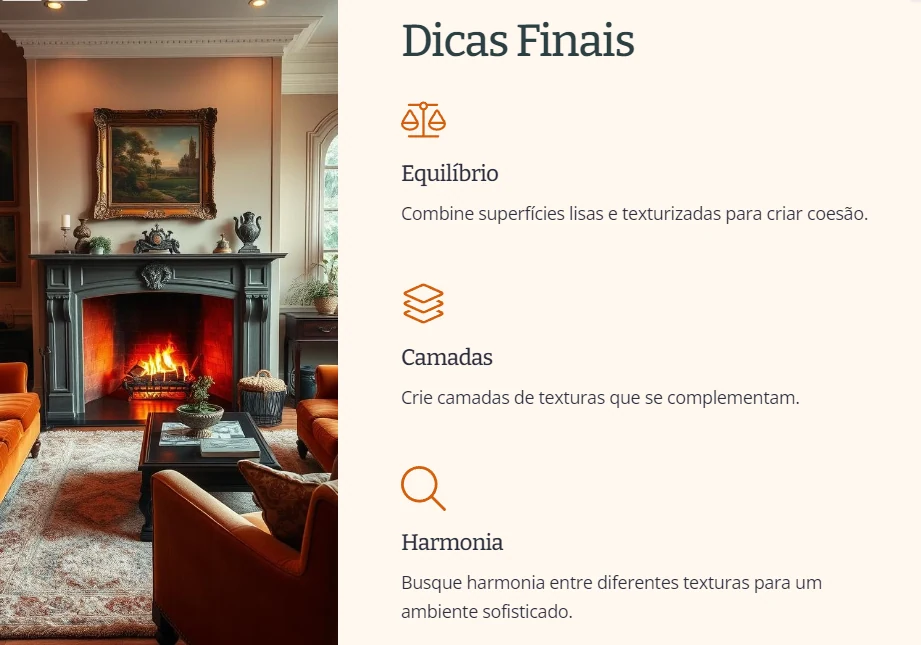
How to use textures to create warm, sophisticated spaces
Wood, stone, fabrics and metals: types of texture, their effects and techniques for combining them in balance.
Texture is an essential element in interior design, influencing both the visual and sensory character of spaces. A balanced combination of textures can create interiors that evoke warmth and sophistication at the same time. According to interior designer Kelly Wearstler, “texture gives the surface of a room its character and depth,” making it one of the main tools for creating an engaging, personalized atmosphere (Wearstler, 2016).
1. Combining materials

One of the most effective ways to create a sophisticated, comfortable interior is by combining materials that offer visual and sensory contrasts. Wood, stone, metals and fabrics are elements that produce unique results when combined harmoniously. Juxtaposing materials with different qualities brings richness and depth to a space.
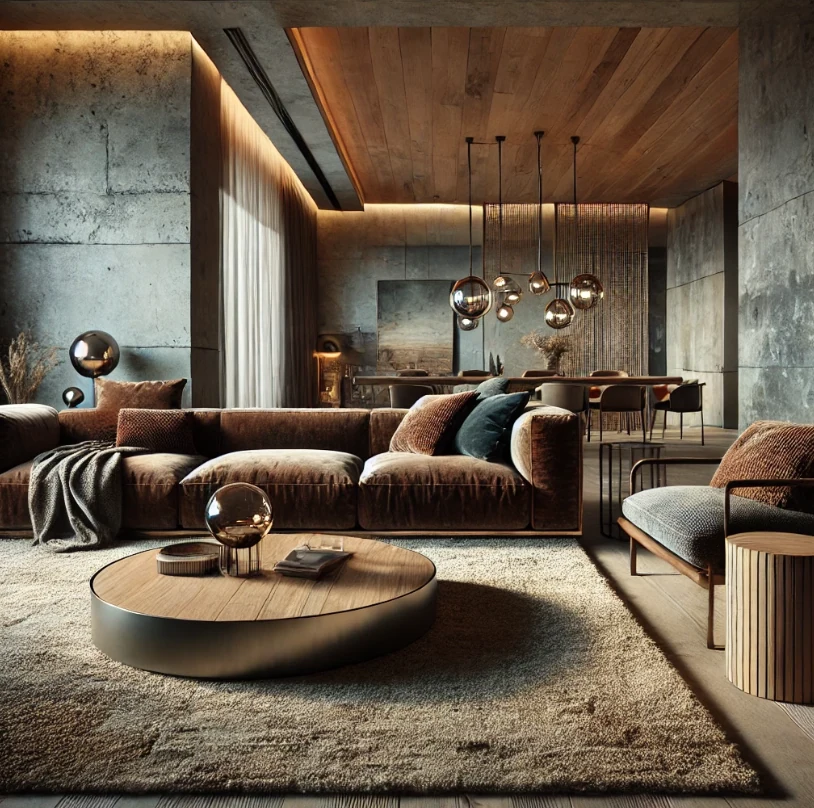
For example, in the living room illustrated above, a wooden coffee table with a rustic finish contrasts with the soft velvet sofa, while a stone wall adds a natural touch.
2. Using fabrics
Fabrics are fundamental to adding texture in spaces such as living rooms and bedrooms. By choosing materials such as linen, velvet or wool, you can create a variety of tactile and visual sensations. Velvet, for example, is associated with luxury, while linen fabrics bring a casual lightness.
In the illustrated living room, the velvet sofa offers a sense of warmth and sophistication, while the shag rug adds warmth to the floor, creating a pleasant contrast with the cool texture of the stone wall.
3. Textured finishes
Wall and floor finishes play a crucial role in creating textured atmospheres. Ching (2018) suggests that surface textures can act as “transitional elements that connect different zones of a room,” making the space more cohesive. Examples include textured tiles in wet areas, such as kitchens or bathrooms, or raw concrete walls in living areas for a more industrial, modern touch.
4. Metals and glass
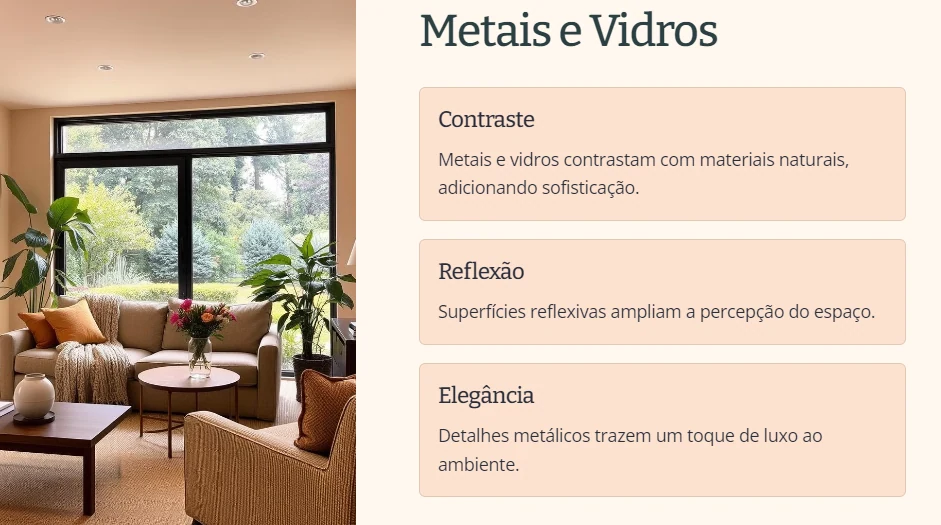
Metals and glass can add sophistication and create a contrast with more natural materials. Metal surfaces reflect light and add touches of shine, while glass brings lightness and transparency.
5. The interplay of light and shadow
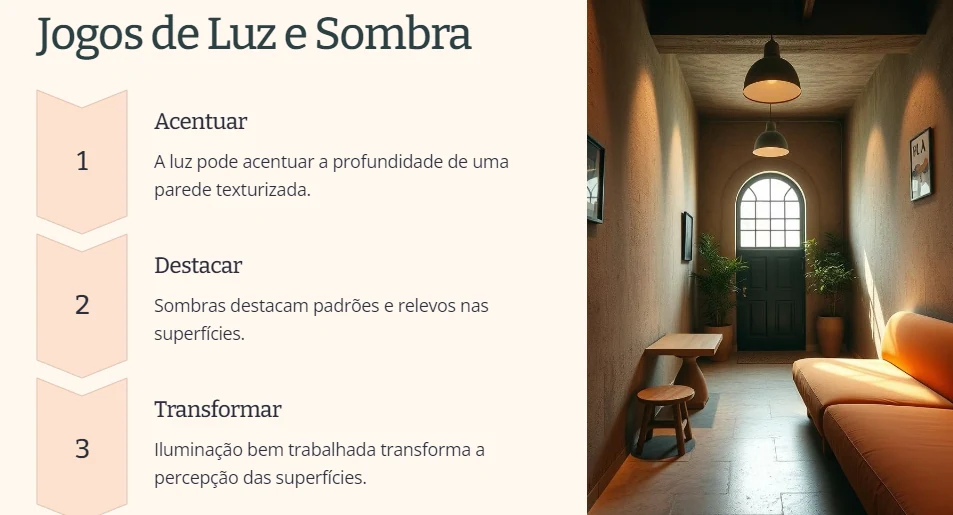
Besides physical textures, lighting plays a fundamental role in how we perceive surfaces. Light can accentuate the depth of a textured wall or create shadows that highlight patterns and reliefs.
Balance in the composition
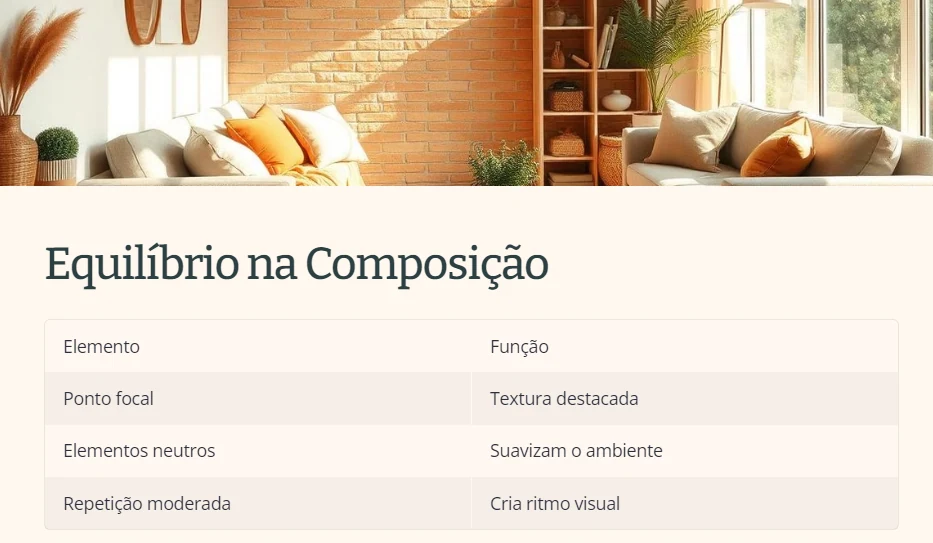
When working with textures in a room, it is essential to maintain a harmonious balance to avoid visual and sensory overload. Too many heavy or conflicting textures can create a sense of disorder and discomfort. As designer Kelly Wearstler (2016) points out, “the balance between smooth and textured surfaces is what brings cohesion to a space, creating a sense of flow and unity.” The key to this balance is choosing one textured element as a focal point, whether a stone wall, a statement piece of furniture or a rug, and softening the rest of the room with more neutral, gentle textures.
In the illustrated living room example, the stone wall acts as the focal point, bringing a robust, natural texture to the space. Around it, the velvet sofa and soft rug add comfort, balancing the wall's denser texture. Metal and glass elements, such as lights and tables, introduce cooler, smoother textures, preventing the room from feeling heavy. This interplay of opposites, contrasting tactile and visual surfaces, ensures depth without losing harmony.
According to Ching (2018), moderately repeating the same texture in different areas of a room can create a visual rhythm that guides the eye subtly and in an organized way. This concept of repetition is visible, for example, when a wood texture appears both on the floor and in furniture details, maintaining cohesion without monotony. The secret, therefore, is to balance the materials, creating layers that complement one another.
Conclusion
Using textures in interior design is a powerful way to transform any space, creating feelings of warmth, sophistication and balance. Strategically combining materials such as wood, stone, fabrics and metals offers visual appeal as well as a complete sensory experience. Well-chosen, balanced textures can add depth and personality to spaces, highlighting their qualities.
As we have seen, texture goes far beyond touch; it defines how we perceive a room. Whether choosing a velvet sofa for elegance, a stone wall for a natural feel or metal light fixtures that contrast with more rustic materials, balance is fundamental. Creating harmony between opposing textures, such as smooth and rough, cool and warm surfaces, provides a sense of cohesion and sophistication.
References from experts such as Kelly Wearstler, Francis DK Ching and Suzanne Trocmé reinforce the importance of understanding how different materials interact in a space, creating visual and sensory rhythms that influence comfort and aesthetics. When planning an interior project, therefore, consider textures as one of the main pillars for creating spaces that are functional, beautiful and welcoming.
In summary, using textures is a way to enrich any space, providing comfort without sacrificing sophistication. By applying these techniques in residential or commercial projects, you can create memorable environments that reflect their occupants' style and personality, offering a unique, engaging experience.