
Commercial architecture: tips to improve acoustic comfort in your space
Sound-absorbing materials, layout, ceilings and partitions: how to improve acoustics in commercial spaces for customers and teams.
In commercial architecture projects, acoustic comfort is one of the most important factors in ensuring a pleasant experience for both customers and employees. A noisy commercial space can cause discomfort and even drive customers away, while an environment with suitable acoustic control promotes focus, well-being and productivity.
But how can you improve acoustic comfort in your commercial space? In this post, we share practical tips that can be applied to various establishments, such as stores, offices and restaurants.
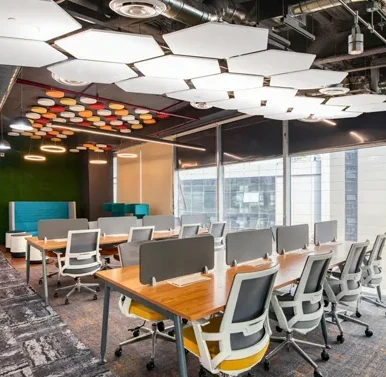
1. Understand your space's needs
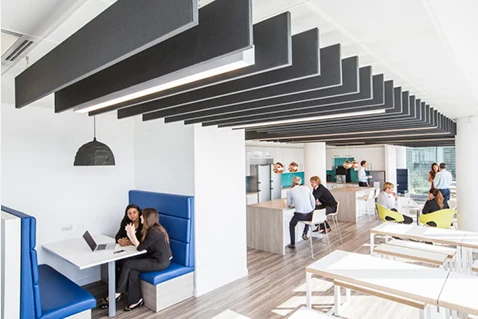
Each type of commercial environment has specific acoustic demands. In restaurants, for example, the aim is to soften the noise of conversations and movement so customers can talk comfortably. In offices, the focus may be reducing external and internal noise, creating a space that supports concentration and efficient communication among employees.
Before planning acoustic solutions, carefully analyze the activities carried out in the space and how sound affects the experience of those who use it.
2. Choose sound-absorbing materials
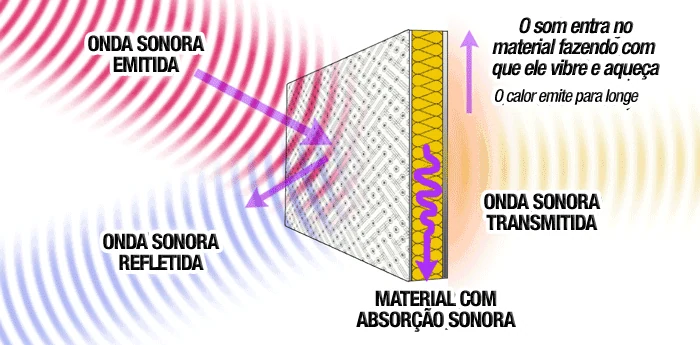
One of the most effective solutions for improving acoustic comfort is investing in materials that absorb sound rather than reflect it, such as:
- Acoustic panels: Available in various shapes and colors, they are a decorative solution that helps reduce sound reverberation.
- Rugs and carpets: Soft surfaces absorb sound better, unlike hard flooring that reflects sound waves.
- Heavy curtains and upholstery: These materials are valuable allies in reducing noise in interiors with many windows or reflective surfaces.
3. Invest in acoustic ceilings and walls
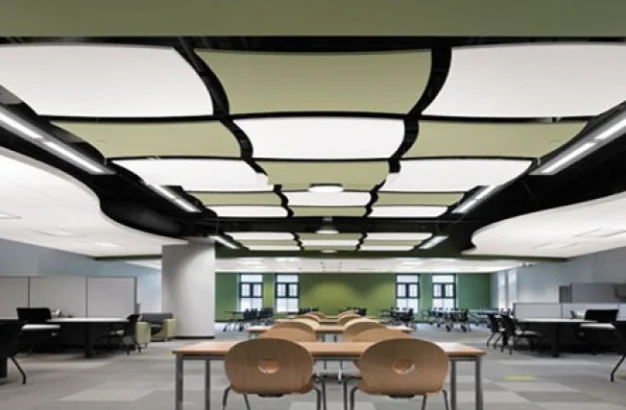
Covering walls and ceilings with acoustic materials is a powerful strategy for controlling sound. Finishes using foam, fabrics or acoustically treated wood panels are options that preserve the design while helping create a quieter, more comfortable environment.
4. Use intelligent partitions
Acoustic partitions divide a space while also blocking sound transmission. This is particularly useful in offices and collaborative spaces, where different teams can work on varied activities without noise interference.
Double-glazed partitions are also an excellent solution for isolating noise without blocking natural light.
5. Incorporate natural solutions
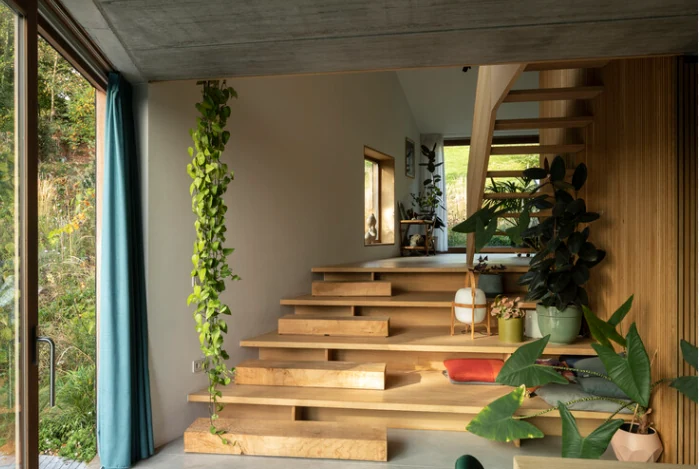
Using plants in commercial projects goes beyond aesthetics. Certain plant species can help absorb sound, creating natural damping. Besides improving acoustic comfort, plants also promote a healthier, more pleasant environment for everyone.
6. Pay attention to furniture and decor
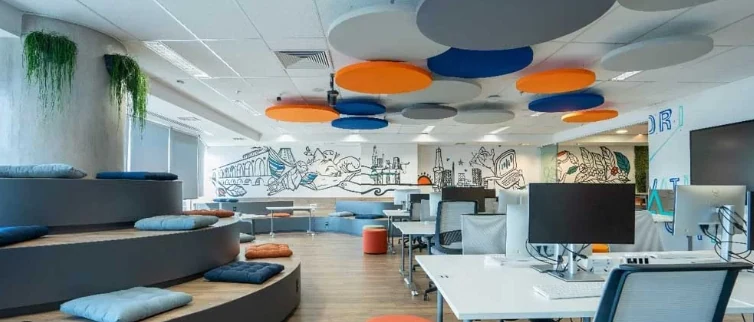
Furniture also plays an important role in acoustic control. Large pieces, such as shelving and sofas, can help block sound transmission. Furniture arrangement also directly affects acoustics, making it essential to consider the placement of items such as tables and chairs relative to high-traffic areas.
7. Technology and sound systems
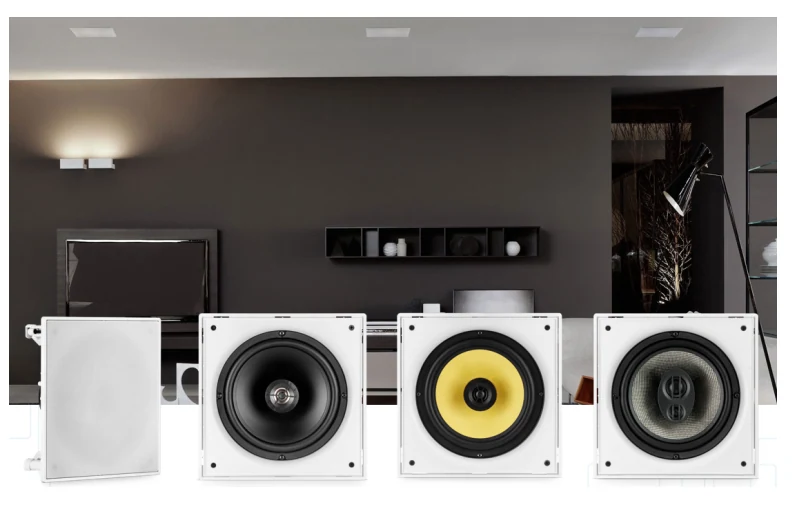
When well designed, background sound systems can also support acoustic comfort. Using background music strategically, for example, can mask unwanted sounds and create a more welcoming atmosphere.
Technologies such as noise cancellation in meeting rooms or phone booths are also useful for settings requiring greater acoustic privacy.
Conclusion
Ensuring acoustic comfort in commercial spaces is an investment directly reflected in customer satisfaction and employee productivity. With the right solutions, it is possible to create a balanced, functional and aesthetically pleasing environment.
If you want to turn your commercial space into a more pleasant, quieter place, seek the help of a professional specializing in acoustics and commercial architecture for the best results.